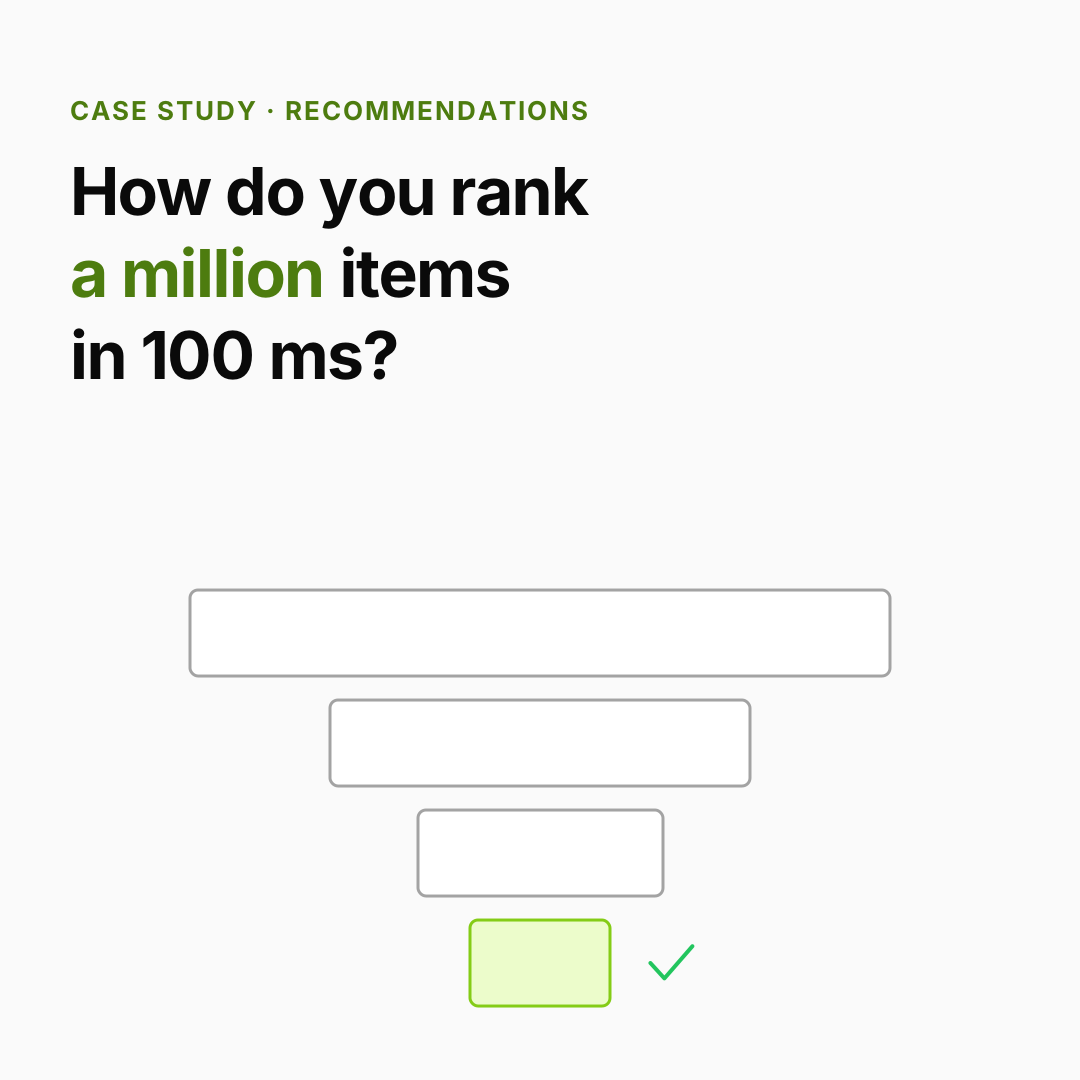
You already know: the system design method and the multi-stage funnel (lesson 01), embeddings and approximate neighbour search (D8), feature stores and parity (lesson 03), and experiments (D10). This case is the foundation for every ranking case in the bank: video feeds, e-commerce search, music, jobs, news, rentals and ads all build on it. It covers retrieval for recommendations and search on shared infrastructure, ranking with labels that reflect real value, position bias and feedback loops, and evaluation that survives contact with users.
How to read this lesson. No code, on purpose. The running example is a learning platform; numbers marked assumed are assumptions you state out loud.
1. The prompt, and the questions that change the design
A mid-level answer: "a two-tower model for recommendations, a separate search engine, and click-trained rankers". A staff candidate first asks what success means (clicks or completion), the catalogue and traffic, which signals exist and how they are biased, and which constraints apply (prerequisites, access by plan, sponsored slots). Those answers produce graded labels that favour completion, one multi-stage funnel shared by both surfaces, position-bias correction with exploration, and hard rules outside the model.
Assumptions you state: