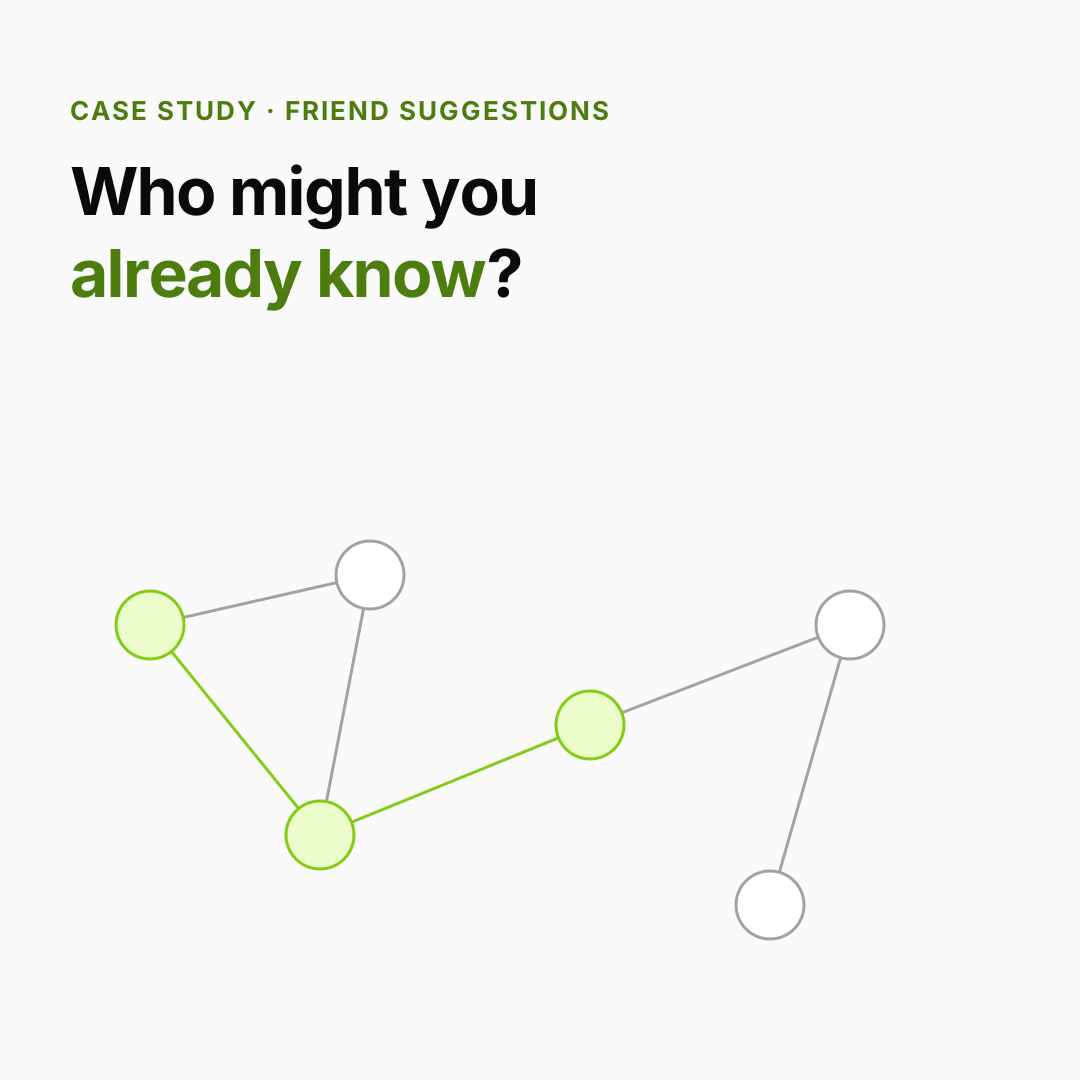
You already know: graphs and random walks (D2), graph embeddings (D4), the job case's lesson about two-sided outcomes, and from the music case that labels from the product's own context are the most useful. This case adds recommendations on a huge graph where the recommendation itself can reveal something: candidates explode combinatorially, a good connection needs both people to want it, and a suggestion can expose a relationship someone wanted kept private. The design questions: how to generate candidates on a graph with hundreds of billions of edges, what label to learn from, which signals are allowed, and how to experiment when suggestions change the graph itself.
How to read this lesson. No code, on purpose. Numbers marked assumed are assumptions you state out loud.
1. The prompt, and the questions that change the design
A mid-level answer: "rank friends-of-friends by mutual friend count, maybe with a model". A staff candidate first asks what a good connection is, how big the graph is, which signals may be used (and with whose consent), and what safety rules apply. Those answers produce a meaningful-connection label, pruned candidate generation in batch with a real-time path for new users, consent-based signals only, and hard filters for blocks and younger users.
Assumptions you state: