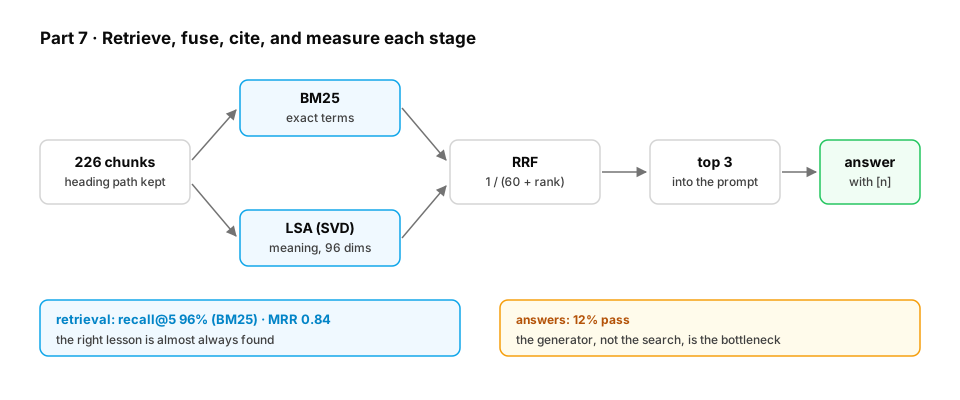
Part 5 showed that a small model can't remember the lessons. Part 6 showed that the same answerer goes from 0% to its best only when it's handed the right text. This part does the handing automatically: retrieval-augmented generation. Atlas cuts the lessons into chunks, searches them two different ways, fuses the results, and passes the top chunks into Part 6's prompt with citations. Then it measures the search and the answers separately, which turns out to be the most important decision in the part.
Step 1 · Chunk by structure
Fixed-size windows cut sentences in half and lose context. Atlas chunks along the lessons' own structure: one chunk per section, long sections split at paragraph boundaries around 180 words, and every chunk keeps its heading path. The heading is indexed together with the text, so a paragraph that never says "asyncio" can still be found under Async and concurrency > 1. The event loop.
Skipping the "Check yourself" sections matters: the evaluation questions come from there, and retrieving them would make the scores meaningless.